Shadow Dungeon Chapter Walkthrough
Seven chapters, 160 maps, official biomes — no invented chapter titles.
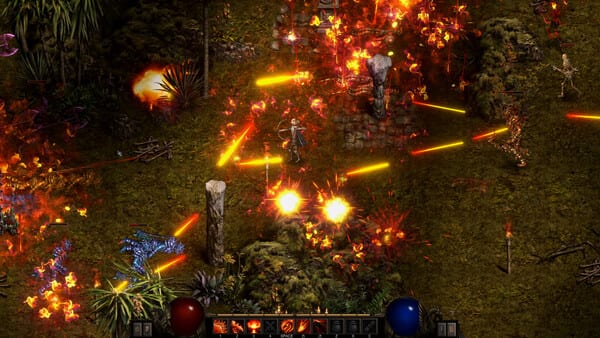
Shadow Dungeon’s campaign is seven chapters and more than 160 unique maps and stages. Official store copy describes the route in environments, not branded chapter subtitles: eerie dungeons, solemn ancient temples, scorching deserts, haunted ruins with restless spirits, realms beyond reality, the depths of hell, and the Demon Lord. This walkthrough follows that list. It does not invent names like “The Awakening” or unofficial boss titles.
The Walkthrough Hub links boss pattern advice, Mystic Dungeon Challenges, and post-story Greater Rifts. For first-hour setup see Getting Started and Combat.
How progression actually works
Version 1.0 retuned the campaign to about 30–50 hours. The level curve is meant to put you near level 99–100 as you finish the story. The cap is 100; after that you use the Paragon tree.
Monster levels and item drops are tied to the map, not your player level. Grinding an early map will not make a later map easier by overleveling the region. If a map feels brutal, the fix is better gear from that map’s drop table, a build that matches the fight, or simply learning combat — not a hidden XP subscription or a co-op carry. The game is single-player only.
There is no official public list of per-chapter recommended character levels, because the map sets the encounter level. Treat “be 99–100 at the credits” as the design target, not a ladder of invented breakpoints.
Dungeons
Early maps teach movement, attacks, and how your class spends resources. Official class identities matter immediately: elemental magic (Sorcerer), dual blades (Holy Warrior), precision (Archer), demons and skeletons (Necromancer). Use these hours to learn telegraphs and inventory, not to hunt a fake “tutorial boss” name. Treasure Sprites will start helping with pickup and salvage once you have them.
Expect dense indoor layouts, traps, and the first taste of the 100 million-plus item pool. Socket gems and Blessing Shrines exist in the 1.0 feature list (seventeen shrine types in store copy) — use what the map gives you; this page will not invent shrine product names.
Ancient temples
Temple maps are described as solemn spaces with room for traps, vertical routes, and slower reads. Watch the floor and the edges of arenas. If a path looks like a puzzle, it probably is. Keep reforging and enchanting in mind as rare pieces appear, but do not stall the campaign farming a named pit that does not exist in official notes.
Scorching deserts
Desert maps change the palette and the enemy mix. Official monster examples in store text include a wide gothic roster (demons, undead, cultists, spirits, and more) without a published “Sand Worm Nest” farm. Play the maps in order. Drops still follow the map. Heat, open sightlines, and longer approaches are the practical difference — not an invented day/night XP table.
Haunted ruins
Haunted ruins are called out for restless spirits. Expect enemies that are harder to read than early dungeon fodder. Ice, light, or whatever your class actually has in its three talent trees is a build question — see Talent Trees — not a promise that a specific named spell is required. Explore thoroughly; the store promises hidden treasures in ruins, not a checklist of illusory-wall coordinates.
Realms beyond reality
Official copy includes distant realms beyond reality — places “no mortal has ever set foot in.” These maps are where layouts get stranger. Use the in-game map often, save anytime (Steam tag), and do not rely on a fan-made “Void Lord” script. If you get lost, backtrack to the last clear landmark rather than assuming a gravity gimmick that was never documented.
Hell
Hell maps are the approach to the abyss. Expect harsher enemy density and the kind of fire-and-demon theming the store advertises. Gear that dropped on earlier maps may feel weak here because the map, not your level, sets the loot and monster tier. Push through with upgraded legendary gear and class sets rather than a fictional Iron Citadel loop.
The Demon Lord
The campaign climax is the Demon Lord. Store and news copy treat this as the story endpoint, not a named four-phase wiki script. Learn the arena, respect telegraphs, and dump defensive tools when the fight accelerates. Victory is the gate to Greater Rifts (Normal / Master / Nightmare / Inferno), not an invented New Game Plus mode.
Secrets and optional routes
OO Cat’s text says every ruin conceals secrets and that legendary creatures lurk in the dark. Explore side rooms before you leave a map. Hidden caches still drop on the map’s table. After the credits, rift runes and enhancement stones become the long-term chase.
Practical routing
- Finish the map in front of you; do not skip ahead hoping to overlevel.
- Spend skill points as you go — 1.0 supports deep trees and, later, unlimited points; 1.0.1 fixed some respec/pinnacle talent bugs.
- Keep a Treasure Sprite habit so ground loot does not stall you.
- When the story ends near 99–100, open Greater Rifts instead of inventing a fifth campaign chapter.
For input notes (mouse movement, controller auto-target, Steam Deck X/A/Y skill points) see Controls and Settings. For the live patch, see Updates Hub.
Frequently Asked Questions
Quick answers to the most common questions about Shadow Dungeon.
What level should I be for each chapter?
There is no official per-chapter level gate. Monster levels and drops follow the map. The 1.0 curve is built so you finish the story around level 99–100, then Paragon. If a map is hard, improve gear and play, do not grind an earlier map expecting to outlevel it.
Are there missable treasures or story content in each chapter?
Official notes emphasize exploration and hidden treasures but do not publish a missable-flag list. Explore each map before you leave. Chapters are part of a 160-map campaign you can replay by returning to maps; this wiki will not invent chest IDs.
How many maps are there in total across all chapters?
Steam lists 7 chapters with over 160 unique maps and stages. Exact per-biome counts are not broken out in the 1.0 notes.
Is there New Game Plus after defeating the Demon Lord?
Official 1.0 notes describe Greater Rifts after the main story (Normal, Master, Nightmare, Inferno) and Paragon after level 100. This wiki does not claim a New Game Plus mode unless OO Cat lists one.
What is the hardest part of the campaign?
Hell maps and the Demon Lord sit at the end of the environment list and use map-tied difficulty, so they are the natural peak. Greater Rifts after the story are the explicit hard endgame ladder, especially Inferno.